How to Write a Clear AI Prompt
Learn to write clearer AI prompts using a goal, useful context, an output format and practical follow-up questions.
In this guide
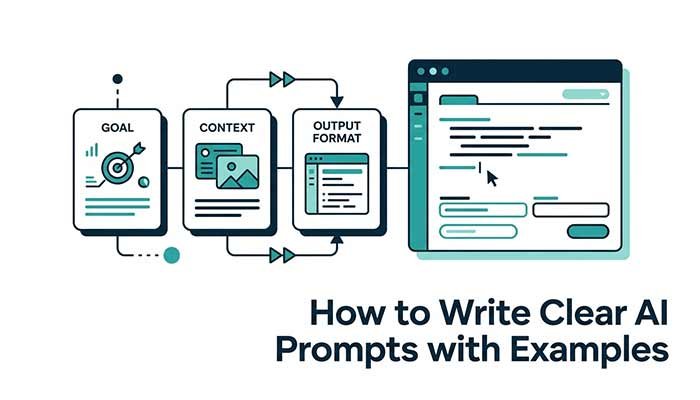
A good AI prompt explains the task, gives relevant context and describes the answer you need. You do not need a complicated formula or a long list of commands. Start with a clear request, read the result and use a follow-up question to improve it.
This guide is for adults using an AI assistant for everyday writing, learning and planning. The examples are starting points, not guarantees of a correct answer. You can try them in General Assistant.
Start with one clear goal
Choose a task the assistant can work on: explain, outline, compare, rewrite or brainstorm. A broad request such as “Help with my business” leaves the goal unclear. A narrower request gives the answer a useful direction.
For example, ask for three ways to explain a product feature to a first-time buyer. If you need several tasks, complete them in stages. First develop an outline, then review it, and only then ask for a draft. This makes mistakes easier to spot and keeps the conversation focused.
Add context the answer actually needs
Tell the assistant who the answer is for and what you already know. A beginner explanation needs different language from a technical note for an experienced colleague. Include the purpose, audience and any genuine constraints, such as a word limit or a required tone.
You can also supply a short passage to rewrite or a list of facts to organize. Separate that material from your instructions. Do not paste passwords, financial account details, private messages or confidential documents. More context is useful only when it helps the task; unrelated details can distract from your goal.
Choose a format and language
Ask for an output that fits how you will use it. A comparison may work best as a table, a process as a checklist, and an introduction as a short paragraph. State the language and approximate length when those matter.
Explain compound interest to an adult beginner. Use a simple example with an initial amount of ₹1,000 and a hypothetical annual rate of 5%. Show the calculation for two years, assuming annual compounding and no additional deposits. Keep the explanation under 150 words.
The rate in this example is a teaching assumption, not an investment offer. The first year would end at ₹1,050 and the second at ₹1,102.50. Having a small result you can calculate yourself helps you judge whether the AI explanation is reliable.
Use examples to describe the style
If you want a particular tone, explain it in concrete terms. “Use short sentences and familiar words” is clearer than “Make it great.” You can provide a short example you have permission to use and identify the qualities you like.
For an email, say who will receive it and what action you want them to take. For a product description, give accurate specifications instead of asking the assistant to invent benefits. Avoid directions to fabricate testimonials, credentials or results. A polished sentence is only useful when its claims are true.
Review the answer before asking for more
Check whether the response answers the original question. Look for missing steps, invented facts, unsupported promises and unclear assumptions. For calculations, work through a small example independently. For code, test it in a safe environment before using it with important data.
Our current General Assistant does not search the live web. A request to “check the latest information” does not give it that ability. Open reliable sources yourself when prices, rules, product details or other current facts matter. Do not assume that a reference supplied by an AI exists or supports the statement.
Refine with a focused follow-up
You rarely need to restart just because the first draft is imperfect. Point to the part that needs work and state the change. Ask for a shorter version, a clearer example or a different structure. Change one or two things at a time so you can see what improved.
Rewrite the introduction using simpler English. Keep the main point and remove unsupported claims. Use no more than three sentences, and explain any technical term that remains.
Recent messages help the assistant follow the conversation, but this website sends only a limited recent history with each request. A very long chat may lose earlier context. Download useful notes before starting a new chat, and repeat essential requirements in the new conversation.
A reusable prompt checklist
- Goal: what should the assistant do?
- Context: what facts and audience details are necessary?
- Format: paragraph, checklist, table or another structure?
- Constraints: language, length, tone and genuine requirements?
- Review: which claims or outputs will you check?
You do not need every item for every question. A simple explanation may need only a task and an audience. Add detail when the first answer reveals what was missing.
Common questions
Are longer prompts always better?
No. Relevant information matters more than length. A short, specific request can be easier to follow than a long prompt with competing instructions.
Can I write the prompt in Hindi?
Yes. You can ask in Hindi and choose Hindi as the answer language. Review the meaning of any translation, especially technical terms and names.
Will a perfect prompt guarantee an accurate answer?
No. Better instructions help communicate your intent, but they do not eliminate model errors or give the assistant capabilities it does not have.
This guide was prepared with AI assistance. If you notice an error or an unclear example, use the contact link below to report it.