How to Practise Interview Answers with AI
Use one question at a time, real examples and focused feedback to improve an interview answer.
In this guide
AI interview practice is a rehearsal, not a prediction of a hiring decision. It works best when you answer first and use feedback to improve clarity. Keep the examples grounded in your own experience and avoid memorizing a polished story that is not true.
Define the practice session
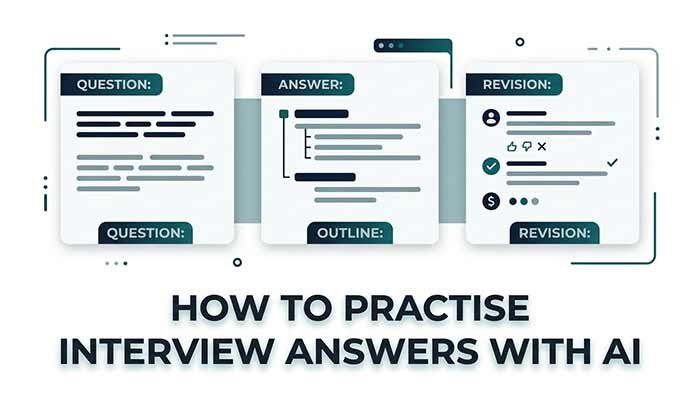
State the role, approximate level and type of interview. Ask for one question at a time so the conversation resembles a manageable exercise. Mention whether you want to practise a concise introduction, a workplace example or an explanation of a technical task.
Run a practice interview for an entry-level office coordinator role. Ask one question at a time. After each answer, give one strength, one missing detail and a follow-up question. Do not predict whether I will be hired or claim these are the employer’s real questions.
Answer before looking at a model answer
Try your own response first. If you immediately ask for an ideal answer, you may copy a structure without recognizing what information you can genuinely provide. Start with the situation, your action and what happened or what you learned.
For a question about fixing an error, describe one real event without revealing private workplace information. Explain the specific step you took. “I checked the sheet against the source record” is clearer than “I used excellent problem-solving skills”.
Request actionable feedback
Ask whether the response answered the question, identified your contribution and included enough evidence. A useful comment points to one gap, such as an unclear result or too much background. A vague score out of ten is less useful than a concrete revision task.
Review my answer for relevance and clarity. Identify one sentence I can shorten and one detail I should explain. Do not add a successful result or a leadership role that I did not describe.
Rehearse a revised version aloud
Write a shorter version in your own words and say it aloud. Notice where you hesitate because the wording is unfamiliar. Keep the structure, but replace phrases you would not naturally use. Time it if the interview format requires a brief answer.
Practice a follow-up question as well. An interviewer may ask what you would do differently or how you know the result was useful. Being able to explain the evidence matters more than reciting a memorized paragraph.
Know the limits of the simulation
The assistant does not know the employer’s private criteria, the other applicants or the actual interview questions. It cannot assess your hiring chances. Treat its feedback as a writing and rehearsal aid, then use your own knowledge of the role and professional context.
Questions that often come up
Should I memorize the AI answer?
Use a structure you understand and speak in your own words. Memorizing invented or unfamiliar details can make follow-up questions harder.
Can it tell me whether I will get the job?
No. The practice conversation does not provide evidence about the employer’s decision or the other candidates.
Try the related pages
This guide was prepared with AI assistance and checked against the behaviour of the ReDeepSeek tools. Review AI answers before using them and report unclear examples through our Contact page.